
Whether you've injured your shoulder bench pressing, hurt your back deadlifting, developed knee pain while squatting, or irritated your elbow during pull-ups, a gym injury doesn't have to mean giving up training.
At Next Level Physiotherapy and Strength Studio, our physiotherapists focus on identifying why your injury developed, modifying aggravating movements where needed, and progressively rebuilding your strength so you can return to lifting with confidence.
Every rehabilitation program is tailored to your injury, your goals, and the activities you want to get back to, whether that's training in the gym, competing in sport, or simply moving without pain.
Gym Injury Rehabilitation In Varsity Lakes
No referral required • Private health rebates available • Convenient Varsity Lakes location
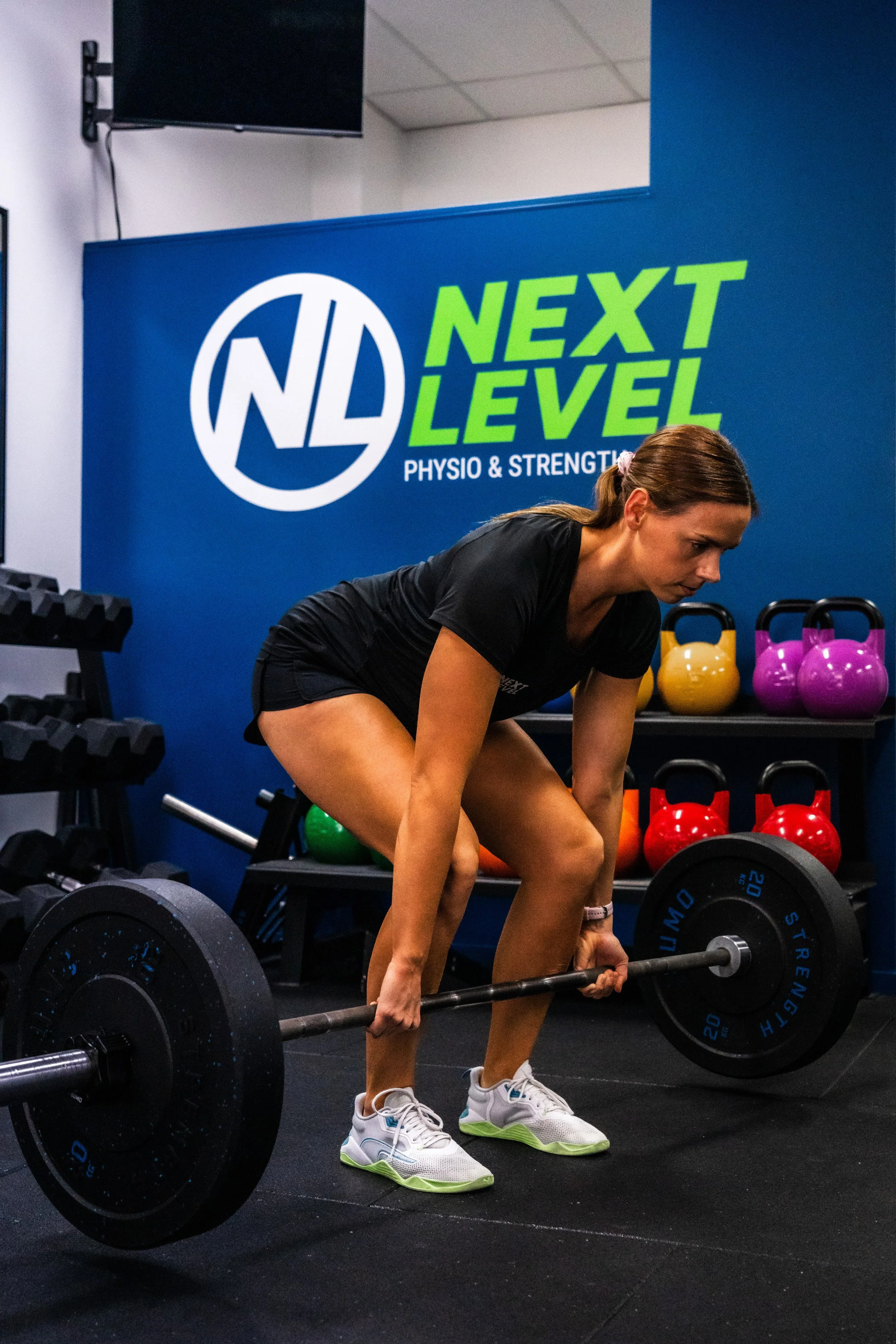
Common Gym Injuries We Treat
Every gym injury is different, but many share one thing in common.
They occur when the demands of training exceed what your body is currently prepared to tolerate.
Whether your symptoms developed gradually over time or started during a specific lift, understanding the underlying cause is the first step toward successful rehabilitation.
Explore the most common gym injuries below to learn more about their causes, treatment, and the rehabilitation process.
Shoulder Pain Physiotherapy:
Knee pain is common during squats, lunges, running, and jumping, but it doesn't automatically mean these activities are harmful. Rehabilitation focuses on improving strength, movement control, and your knee's ability to tolerate the demands of training.
Related articles:
Knee Pain Physiotherapy:
Knee pain is common during squats, lunges, running, and jumping, but it doesn't automatically mean these activities are harmful. Rehabilitation focuses on improving strength, movement control, and your knee's ability to tolerate the demands of training.
Related articles:
Back Pain Physiotherapy:
Back pain can develop after heavy lifting, repeated training sessions, or a sudden increase in workload. In many cases, the goal isn't to stop lifting altogether but to identify what's contributing to your symptoms and progressively rebuild your strength so you can return to training confidently.
Related articles:
Elbow Pain Physiotherapy:
Elbow pain often develops from repeated gripping, pressing, and pulling exercises such as bench press, pull-ups, and rows. Rather than avoiding these movements forever, rehabilitation aims to gradually restore strength and confidence so you can return to training without recurring flare-ups.
Related articles:
Hip Pain Physiotherapy:
Hip pain can affect everything from squats and deadlifts to running and everyday movement. A structured rehabilitation program helps identify what's contributing to your symptoms while progressively rebuilding strength and improving your tolerance to training.
Related articles:
Hip injury rehabilitation articles coming soon.
Neck Pain Physiotherapy:
Neck pain can develop after heavy lifting, upper body training, prolonged desk work, or a combination of factors. Rehabilitation focuses on improving movement, restoring strength, and helping you return to training without unnecessary fear or avoidance.
Related articles:
Hip injury rehabilitation articles coming soon.
Injury Advice & Rehabilitation Guides
Not every gym injury affects only one body part.
Many questions about pain, recovery, rehabilitation, and returning to training apply whether you're dealing with shoulder, back, knee, or elbow pain.
Explore our evidence-based guides below to better understand how injuries recover and how you can return to training with confidence.
Featured guides (more coming soon):
Our Approach To Gym Injury Rehab
Every injury is different, but our rehabilitation approach follows the same principles.
The goal isn't simply to reduce pain.
It's to help you return to training with confidence while reducing the risk of recurrence.
Rather than relying on passive treatment alone, rehabilitation focuses on understanding why your injury developed, improving your body's ability to tolerate load, and progressively rebuilding the strength needed for your sport, training, or everyday life.
Our rehabilitation programs are tailored to your individual goals and may include:
A thorough assessment to identify the factors contributing to your injury
Education to help you understand your symptoms and recovery
Progressive strength training to rebuild capacity
Exercise prescription specific to your injury and training goals
Temporary modifications to aggravating exercises where needed
A structured plan to safely return to lifting, sport, or work
Whether you're recovering from shoulder pain during bench press, knee pain while squatting, back pain after deadlifting, or another gym-related injury, we focus on helping you move well, get stronger, and return to the activities you enjoy.
To learn more about our rehabilitation philosophy, explore our guides on:
Frequently Asked Questions
-
Not necessarily. Many people can continue training with appropriate exercise modifications while rehabilitation focuses on rebuilding strength and reducing excessive irritation.
-
Often, yes. Squats can frequently be modified by adjusting load, depth, tempo, or exercise variation while your knee's capacity improves.
-
Not inherently. Bench press is a safe and effective exercise for many people. Shoulder pain usually reflects a mismatch between load and capacity rather than the exercise itself.
-
No. We help everyone from beginners through to competitive athletes. Whether you train in a commercial gym, CrossFit, functional fitness, or simply exercise to stay healthy, rehabilitation is tailored to your goals.
-
Every injury is different. Recovery depends on the type of injury, your current strength, training history, and how consistently rehabilitation is followed.
Return To Training Stronger Than Before
A gym injury doesn't have to mean giving up the activities you enjoy.
With the right rehabilitation plan, most people can continue moving, progressively rebuild strength, and return to training with greater confidence.
Whether you're recovering from shoulder, back, knee, elbow, hip, or neck pain, we're here to help you understand your injury, rebuild your strength, and get back to doing what you love.